A Complete Guide to Credit Card Cycle and Its Importance
❤️ Spread the Love
Introduction
Using a credit card responsibly requires more than just paying bills on time. One of the most important concepts every cardholder should understand is the credit card cycle. Many users only focus on the payment due date, but the billing cycle plays a much bigger role in interest calculation, credit score reporting, and overall money management.
This detailed guide explains the credit card cycle in a simple and practical way. You will understand how it works, why it is important, and how you can use it smartly to avoid interest charges and maintain a healthy credit profile.
What Is a Credit Card Cycle?
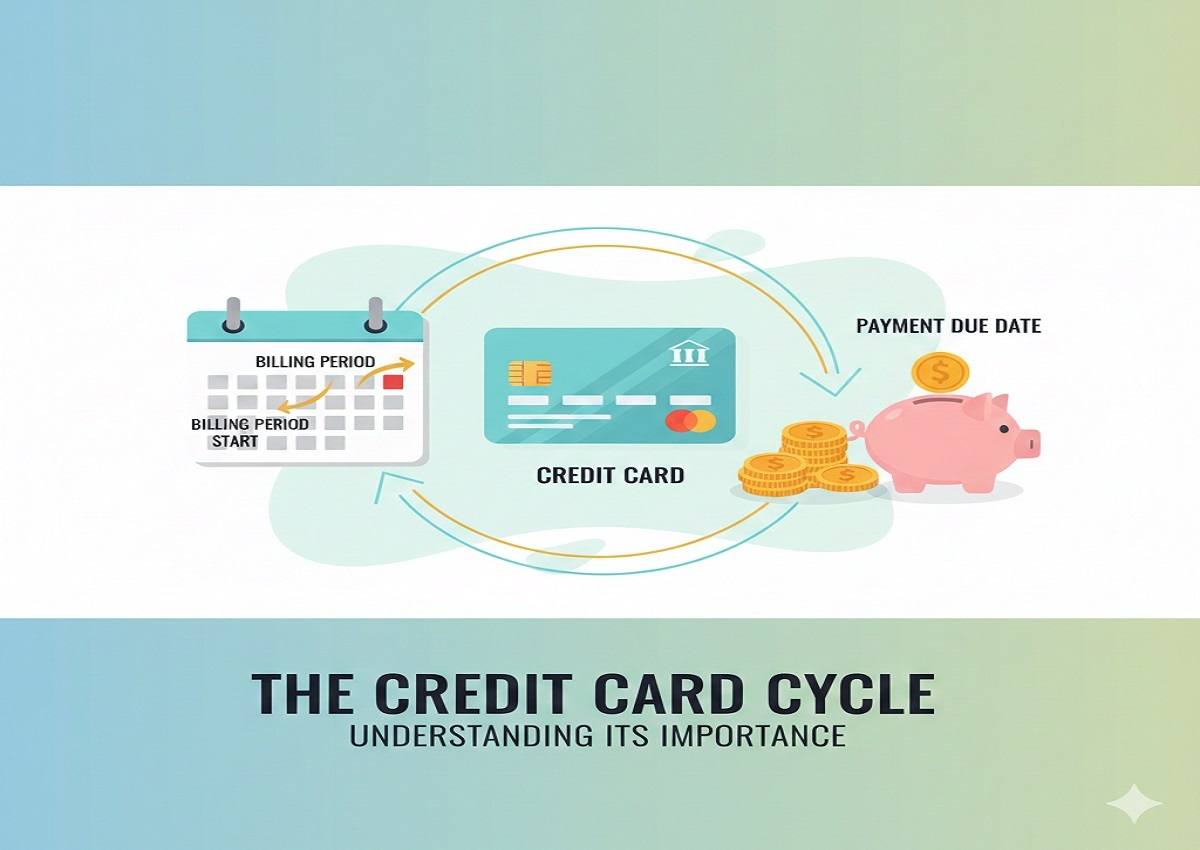
A credit card cycle, also known as a billing cycle, is the fixed period during which all your credit card transactions are recorded by the bank before generating your monthly statement.
-
The cycle usually lasts 28 to 31 days
-
All purchases, EMIs, fees, and refunds during this period are included
-
Once the cycle ends, a statement is generated with a payment due date
In simple terms, it is the time window during which you spend on your credit card before receiving the bill.
How Does a Credit Card Billing Cycle Work?
The credit card billing cycle follows a structured process from spending to payment.


1. Start of the Billing Cycle
This is the first day of your credit card cycle. Any transaction made from this date onward will be counted in the upcoming bill.
2. Transaction Period
All transactions made during the cycle are recorded, including:
-
Purchases
-
Online payments
-
EMI conversions
-
Fees and charges
-
Refunds and reversals
3. Statement Date
On the statement date:
-
The billing cycle ends
-
Your credit card statement is generated
-
Total outstanding amount and minimum amount due are calculated
4. Payment Due Date
This is the last date to pay your credit card bill without penalty. It usually falls 15–25 days after the statement date, offering an interest-free grace period if the full amount is paid.
Credit Card Cycle Example
Assume the following:
-
Billing cycle: 10th of the month to 9th of the next month
-
Statement date: 9th
-
Due date: 29th
How transactions are billed:
-
Purchase on 11th → included in current statement
-
Purchase on 8th → included in same statement
-
Purchase on 10th → included in next billing cycle
This means spending just after the statement date gives you the maximum interest-free period.
Important Terms Related to Credit Card Cycle
Billing Cycle
The period during which your card usage is tracked before billing.
Statement Date
The date on which your monthly credit card bill is generated.
Due Date
The final date to clear your dues without late fees or interest.
Grace Period
The interest-free window between the statement date and the due date (applicable only when full payment is made).
Minimum Amount Due
The minimum payable amount to avoid late payment charges, though interest continues on the remaining balance.
Why Is the Credit Card Cycle Important?
Understanding your credit card cycle offers multiple financial benefits.
1. Helps You Avoid Interest Charges
If you pay the total amount due within the grace period:
-
No interest is charged on purchases
-
You avoid compounding debt
Missing payments or paying partially can lead to very high interest rates.
2. Improves Your Credit Score
Your repayment behavior during each billing cycle is reported to credit bureaus.
-
Timely payments strengthen your credit score
-
High outstanding balances can negatively impact it
Managing your cycle well helps build long-term creditworthiness.
3. Enables Better Cash Flow Planning
Knowing your cycle allows you to:
-
Align expenses with salary dates
-
Plan large purchases strategically
-
Avoid financial stress near due dates
4. Encourages Disciplined Spending
When you track your billing cycle:
-
You stay aware of your monthly spending
-
You avoid overspending
-
You are prepared for upcoming payments
How Credit Card Cycle Affects Interest Calculation
Interest is applied when:
-
You don’t pay the full statement amount
-
You withdraw cash using your credit card
-
You miss the payment due date
Once interest starts, it is calculated daily from the transaction date, not the statement date. This makes cycle awareness extremely important.
Smart Tips to Use Credit Card Cycle Effectively
Spend Just After the Statement Date
This gives you the longest interest-free period—sometimes up to 45–50 days.
Always Pay the Full Bill
Paying only the minimum amount leads to interest on the remaining balance.
Set Payment Alerts
Use auto-debit, reminders, or calendar alerts to avoid missing due dates.
Keep Credit Utilization Low
Try to use less than 30% of your credit limit within each cycle to protect your credit score.
Track Your Billing and Due Dates
Never rely on memory—monitor these dates actively.
Can You Change Your Credit Card Billing Cycle?
Yes, many banks allow cardholders to request a change in billing cycle dates. This is helpful if:
-
Your salary date doesn’t align with the due date
-
You want better control over monthly payments
Requests can usually be made through customer support or mobile banking apps.
Common Credit Card Cycle Mistakes to Avoid
-
Ignoring the statement date
-
Paying only the minimum amount due
-
Frequently missing due dates
-
Maxing out your credit limit every cycle
-
Using credit cards for cash withdrawals
Avoiding these mistakes helps you stay financially healthy.
Frequently Asked Questions (FAQs)
What is a credit card cycle?
A credit card cycle is the fixed period during which all card transactions are recorded before generating the monthly statement.
How long does a credit card billing cycle last?
Most billing cycles last between 28 and 31 days.
What happens if I miss my credit card due date?
You may be charged late fees, interest, and your credit score may be negatively affected.
Is it good to pay the credit card bill before the statement date?
Yes, early payments reduce credit utilization and support a better credit score.
Does paying the minimum due avoid interest?
No. Interest is charged on the remaining unpaid balance.
Conclusion
The credit card cycle is the foundation of smart credit card usage. When you understand how the billing cycle, statement date, and due date work together, you can avoid interest, improve your credit score, and manage your monthly expenses more efficiently.
A credit card is not just about spending—it is about timing, planning, and discipline. Mastering your credit card cycle ensures your card works as a financial advantage rather than a burden.
About the Author
admin
@admin
View all posts →