New Personal Loan or Top-up Loan: Which Should You Choose? – Complete Comparison Guide
❤️ Spread the Love
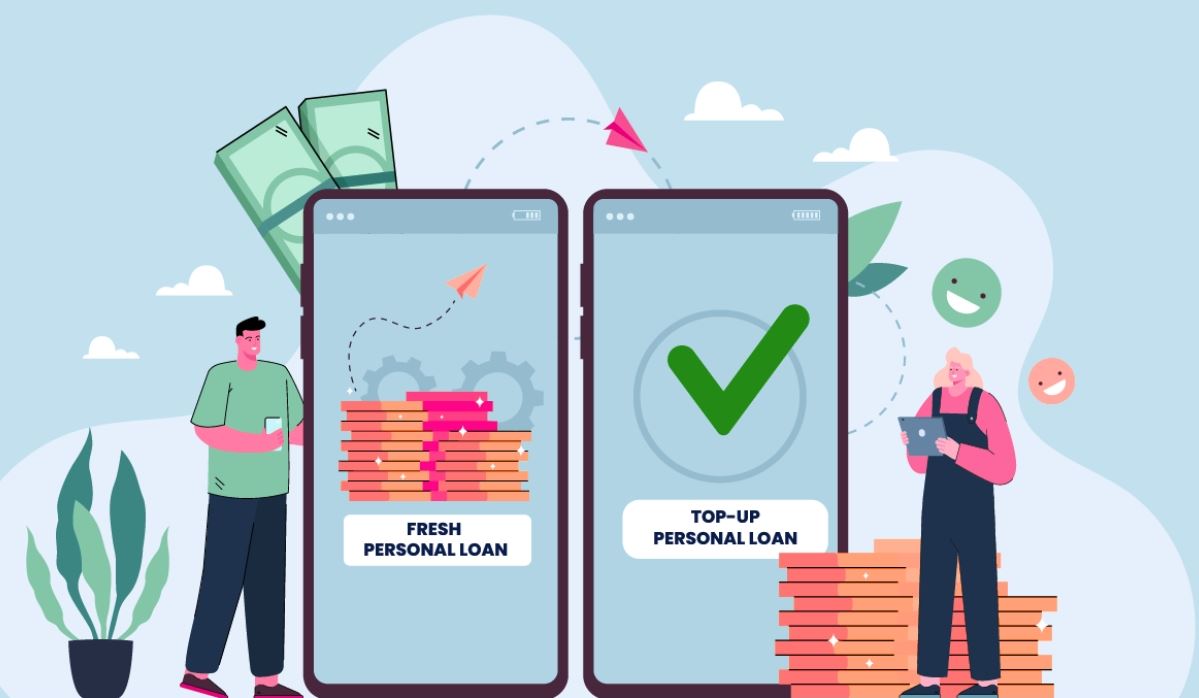
When you need additional funds while already repaying an existing loan, you face a critical choice: should you opt for a top-up loan on your current borrowing or apply for a fresh personal loan? This decision isn’t always straightforward. Each option comes with distinct advantages depending on your specific situation, credit profile, and immediate financial needs.
In this comprehensive guide, we break down the key differences between top-up loans and fresh personal loans to help you make an informed decision. You’ll discover which option might offer better interest rates, faster processing, higher loan amounts, and more favorable terms based on your unique circumstances.
Understanding Personal Loans and Top-up Loans: Basic Differences
Before diving into which option is better, let’s clarify what each of these loan types actually means and how they fundamentally differ.
What is a Personal Loan? Features and Benefits
A personal loan is an unsecured loan provided by banks and financial institutions that doesn’t require collateral. You receive a lump sum amount, which you repay in fixed monthly installments (EMIs) over a predetermined tenure.
Key features of personal loans:
- Loan amounts typically range from ₹10,000 to ₹50 lakhs
- Tenures usually span from 12 to 60 months
- Interest rates generally fall between 10% to 24% p.a.
- No collateral or security required
- Funds can be used for any legitimate purpose
- Requires complete documentation and eligibility verification
The main advantage of personal loans is their versatility. Whether you need funds for a wedding, medical emergency, home renovation, education, or debt consolidation, a personal loan provides quick access to funds without restrictions on end-use.
What is a Top-up Loan? Features and Benefits
A top-up loan is an additional loan amount that lenders offer to existing borrowers who have demonstrated good repayment behavior. It’s essentially an extension of your current loan, whether that’s a personal loan, home loan, or another loan type.
Key features of top-up loans:
- Available only to existing borrowers with good repayment history
- Typically requires completion of a minimum number of EMIs on the existing loan
- Often carries the same or slightly lower interest rate than the original loan
- Usually follows the tenure of the existing loan, though this can sometimes be negotiated
- Processing is generally faster as the lender already has your documentation
- May involve minimal additional paperwork
The primary benefit of a top-up loan is convenience, your existing relationship with the lender streamlines the process, potentially resulting in better terms and faster approval.
Comparison Table: Top-up Loan vs. Fresh Personal Loan
| Factor | Top-up Loan | Fresh Personal Loan |
|---|---|---|
| Eligibility | Only existing borrowers with good repayment history | Any eligible applicant meeting the lender’s criteria |
| Interest Rate | Often same or lower than existing loan | Based on current market rates and applicant’s profile |
| Processing Time | Faster (typically 2-5 days) | Standard (typically 3-7 days) |
| Documentation | Minimal (existing records + income proof) | Complete documentation required |
| Lender Choice | Limited to current lender | Freedom to choose any lender |
| Loan Amount | May be restricted based on existing loan | Based on fresh eligibility assessment |
| Tenure | Often linked to existing loan’s remaining tenure | Fresh tenure options available |
| EMI Structure | May adjust existing EMI or create separate EMI | New independent EMI |
Key Factors to Consider When Choosing Between Top-up and Fresh Personal Loan
Now that you understand the basic differences, let’s explore the critical factors that should influence your decision.
Interest Rate Comparison: Which Option Costs Less?
Interest rates directly impact your total loan cost, making this one of the most important considerations.
Top-up loans often come with interest rates equal to or slightly lower than your existing loan rate. Since you’re an existing customer with a proven repayment track record, lenders may offer preferential rates. However, this depends entirely on your relationship with the lender and their policies.
Fresh personal loans allow you to shop around for the best current market rates. If interest rates have generally fallen since you took your original loan, or if your credit score has improved significantly, a new personal loan might offer better rates than your existing loan.
Cost comparison example: Let’s say you have an existing personal loan at 14% p.a. with 3 years remaining, and you need ₹3 lakhs more:
- Top-up option: If offered at 14% for 3 years, your total interest cost would be approximately ₹69,413
- Fresh loan option: If a new lender offers 12% for 3 years, your interest cost would be approximately ₹58,884
In this scenario, the fresh loan saves you over ₹10,000 in interest costs. However, don’t forget to factor in processing fees for the new loan, which typically range from 1-3% of the loan amount.
Processing Time and Documentation Requirements
When you need funds urgently, processing speed becomes crucial.
Top-up loans have a clear advantage here. Since your lender already has your KYC details, income proof, and credit history, the processing is significantly faster. Many lenders approve top-up loans within 24-48 hours with minimal additional documentation.
Fresh personal loans require complete verification and documentation process, including:
- Identity proof
- Address proof
- Income documents (salary slips, bank statements, ITR)
- Employment verification
- Credit score check
This process typically takes 3-7 business days, though some digital lenders promise faster turnaround times.
Maximum Loan Amount Eligibility Comparison
The amount you can borrow is another critical factor in your decision.
Top-up loans are typically capped at a certain percentage of your existing loan amount or based on your repayment history. If your existing loan is small, the top-up amount might be limited even if your income would qualify you for more.
Fresh personal loans determine your eligibility based on your current financial situation. If your income has increased significantly since your original loan, you might qualify for a larger amount through a fresh loan.
For example, if you originally borrowed ₹5 lakhs when your monthly income was ₹50,000, but now earn ₹80,000 per month, a fresh loan assessment might qualify you for ₹8 lakhs or more, whereas a top-up might be restricted to a percentage of your original loan.
Impact on Credit Score and Future Borrowing Capacity
Both options affect your credit profile, but in different ways.
Top-up loans typically have minimal impact on your credit score since they’re extensions of existing credit relationships. They appear as increases to existing loan amounts rather than new credit lines. However, the increased debt burden will affect your debt-to-income ratio.
Fresh personal loans generate a new hard inquiry on your credit report, which may temporarily lower your score by a few points. They also establish a new credit account, which initially might lower your score but can help diversify your credit mix over time.
According to CIBIL, multiple loan applications within a short period can signal financial distress to lenders. If you’re planning major financial moves in the next 6-12 months (like applying for a home loan), consider how each option might affect your credit profile.
Top-up Loan vs. Personal Loan: Scenario-Based Decision Guide
Different financial situations call for different solutions. Here’s when each option makes more sense.
When a Top-up Loan Makes More Sense (With Examples)
1. When you need funds quickly with minimal hassle If time is of the essence,perhaps for a medical emergency or time-sensitive investment opportunity, the streamlined processing of a top-up loan is advantageous.
Example: Rahul needed ₹2 lakhs urgently for his father’s surgery. His existing lender approved a top-up loan within 24 hours with just income verification, whereas a new loan would have taken at least 3-4 days.
2. When your existing loan has favorable terms If your current loan has a competitive interest rate and your relationship with the lender is good, extending that relationship through a top-up often makes sense.
Example: Priya has a personal loan at 11% when the current market rates average 13-14%. Her lender offered a top-up at the same 11% rate, making it more economical than a fresh loan.
3. When you want to simplify repayment management Managing multiple loans means multiple repayment dates, statements, and potential penalties if you miss any payments. A top-up consolidates your borrowing.
Example: Vikram was already managing a home loan, car loan, and personal loan. Rather than adding a fourth loan to track, he opted for a top-up on his existing personal loan to fund his home renovation.
When a Fresh Personal Loan is the Better Choice (With Examples)
1. When you can secure significantly better interest rates If market rates have dropped substantially or your credit score has improved dramatically since your original loan, a fresh loan might offer much better terms.
Example: When Anjali took her original loan three years ago, her credit score was 720 and she got a 15% interest rate. Now with a 780 score and lower market rates, she qualified for a new loan at just 11.5%.
2. When you need a substantially higher loan amount If your financial situation has improved and you need significantly more than what a top-up would provide, a fresh loan based on your current eligibility makes more sense.
Example: Karthik originally borrowed ₹3 lakhs when his salary was ₹40,000 monthly. Now earning ₹75,000, he needed ₹7 lakhs for his business expansion. His top-up eligibility was only ₹2 lakhs, so a fresh loan assessment made more sense.
3. When you’re dissatisfied with your current lender If your experience with your current lender has been poor, perhaps due to customer service issues or inflexible policies, a fresh start with a new lender might be preferable.
Example: Sneha had constant issues with her lender’s customer service and online portal. Despite the convenience of a top-up, she opted for a fresh loan with a digital-first lender known for better customer experience.
Should You Choose a Top-up Loan or a Fresh Personal Loan?
To simplify your decision-making process, follow this flowchart:

- Do you need funds urgently (within 48 hours)?
- Yes → Consider top-up loan
- No → Continue to next question
- Is your current loan at a competitive interest rate compared to today’s market?
- Yes → Consider top-up loan
- No → Consider fresh personal loan
- Has your income increased significantly since your original loan?
- Yes → Consider fresh personal loan for higher eligibility
- No → Continue to next question
- Do you have a good relationship with your current lender?
- Yes → Consider top-up loan
- No → Consider fresh personal loan
- Do you need an amount much larger than what would be available as a top-up?
- Yes → Consider fresh personal loan
- No → Consider top-up loan
Most lenders require that you’ve successfully repaid 12 to 18 EMIs of your existing loan before becoming eligible for a top-up. This demonstrates your repayment capacity and builds credibility with the lender.
The option with more “consider” recommendations is likely your better choice, though individual circumstances may vary.
Case Study: Comparing Total Cost and Convenience
Let’s examine real scenarios to see how these decisions play out in practice.
Example 1: Home Renovation Financing Comparison
Scenario: Deepak has an existing personal loan with ₹4 lakhs outstanding at 13% p.a. with 3 years remaining tenure. He needs ₹3 lakhs for home renovation.
Option 1: Top-up loan
- Top-up amount: ₹3 lakhs
- Interest rate: 13% (same as existing loan)
- Tenure: 3 years (aligned with existing loan)
- Processing fee: 0.5% (₹1,500)
- Total interest: ₹65,336
- Total cost: ₹3,66,836
Option 2: Fresh personal loan
- Loan amount: ₹3 lakhs
- Interest rate: 12% (better rate due to improved credit score)
- Tenure: 3 years
- Processing fee: 2% (₹6,000)
- Total interest: ₹60,096
- Total cost: ₹3,66,096
Analysis: Despite the higher processing fee, the fresh loan saves Deepak ₹740 due to the lower interest rate. However, this small difference might not justify the additional paperwork and time investment unless Deepak has other reasons to switch lenders.
Example 2: Debt Consolidation Options
Scenario: Meera has an existing home loan with ₹25 lakhs outstanding at 8.5% p.a. with 15 years remaining. She also has credit card debt of ₹4 lakhs at 36% p.a. She wants to clear her high-interest debt.
Option 1: Home loan top-up
- Top-up amount: ₹4 lakhs
- Interest rate: 8.5% (same as existing home loan)
- Tenure: 15 years (aligned with existing loan)
- Processing fee: 0.5% (₹2,000)
- Total interest over 15 years: ₹3,06,189
- Total cost: ₹7,08,189
Option 2: Fresh personal loan
- Loan amount: ₹4 lakhs
- Interest rate: 11% (good personal loan rate)
- Tenure: 5 years
- Processing fee: 2% (₹8,000)
- Total interest: ₹1,21,484
- Total cost: ₹5,29,484
Analysis: Although the home loan top-up has a lower interest rate, the much longer tenure means Meera would pay significantly more interest overall. The personal loan with a shorter tenure would save her nearly ₹1.8 lakhs despite the higher interest rate. This illustrates why tenure is as important as interest rate in determining total cost.
From Community Real Borrower Experiences with Both Options
From Quora: “I have a home loan running. Should I take a top-up or new personal loan?”
The discussion revealed diverse perspectives from actual borrowers:
One homeowner shared: “I took a home loan top-up at 8.5% instead of a personal loan at 12%. For my ₹10 lakh requirement, the EMI difference was significant. However, I realized later that my top-up extended for 20 years alongside my home loan. I’m essentially paying for my renovation for 20 years, which doesn’t make financial sense. I should have taken a personal loan with a 5-year tenure despite the higher rate.” Join the conversation
Another user commented: “I chose a personal loan over a home loan top-up despite the higher interest rate because I didn’t want to extend my debt obligation on my home. My home loan was already 10 years in, and adding a top-up would have complicated my prepayment plans. The psychological benefit of keeping these separate was worth the extra interest cost.”
| The community consensus seems to be that while top-ups often offer better rates, the tenure alignment and total interest paid over the extended period should be carefully considered. |
How to Apply for a Personal Loan or Top-up Loan
Whether you’ve decided on a top-up loan or a fresh personal loan, here’s how to proceed with your application.
Top-up Loan Application Process
- Contact your existing lender: Reach out to your current bank or NBFC through their branch, website, or mobile app.
- Check eligibility: Most lenders require that you’ve paid 12-18 EMIs of your existing loan without defaults before qualifying for a top-up.
- Submit documents: Typically, you’ll need:
- Updated income proof (salary slips or ITR)
- Bank statements for the last 3-6 months
- Any change in address or employment details
- Loan approval: The lender will assess your repayment history and current eligibility before approving the top-up amount.
- Disbursement: Once approved, the additional amount is typically disbursed to your bank account within 1-3 business days.
Fresh Personal Loan Application Process
- Compare lenders: Research multiple banks and NBFCs to find the best interest rates and terms for your needs. You can apply for a personal loan online through platforms like PayMe India for a seamless experience.
- Complete application: Fill out the loan application form with personal, professional, and financial details.
- Submit documents: Prepare and submit:
- Identity proof (PAN card, Aadhaar card)
- Address proof (utility bill, rental agreement)
- Income documents (salary slips, bank statements, ITR)
- Employment verification
- Recent passport-sized photographs
- Credit assessment: The lender will verify your documents, check your credit score, and assess your repayment capacity. (Also, read: How to improve CIBIL Score)
- Loan approval and disbursement: Upon approval, you’ll receive the loan agreement. After signing, the amount is typically disbursed within 2-7 business days.
Frequently Asked Questions
1. Can I get a top-up loan from a different lender than my existing loan?
No, top-up loans are exclusively offered by your current lender on your existing loan. To get additional funds from a different lender, you would need to apply for a fresh personal loan or consider a balance transfer plus top-up with the new lender.
2. How long do I need to wait before applying for a top-up loan?
Most lenders require that you’ve successfully repaid 12 to 18 EMIs of your existing loan before becoming eligible for a top-up. This demonstrates your repayment capacity and builds credibility with the lender.
3. Will taking a top-up loan affect my credit score?
A top-up loan typically has minimal impact on your credit score since it’s an extension of an existing credit relationship rather than a new credit line. However, the increased debt burden will affect your debt-to-income ratio, which is a factor in your overall creditworthiness.
4. Which option is better for debt consolidation?
For debt consolidation, the best choice depends on the interest rates and tenures involved:
- If consolidating high-interest debts like credit cards, a top-up on a low-interest home loan often provides the lowest interest rate.
- However, be cautious about extending the repayment period too long, a shorter tenure personal loan might result in less total interest despite the higher rate.
5. Can I get a top-up on any type of loan?
Top-ups are most commonly available on home loans, personal loans, and loan against property. Some lenders also offer top-ups on car loans and education loans, though this varies by institution. Credit cards offer a similar concept through credit limit increases rather than formal top-ups.
6. How is the EMI calculated after taking a top-up loan?
Lenders typically handle top-up loan EMIs in two ways:
- Combined EMI: Your existing EMI is recalculated to include both the original loan balance and the top-up amount.
- Separate EMI: The top-up is treated as a separate loan with its own EMI, so you’ll pay two EMIs to the same lender.
The approach varies by lender and loan type, so clarify this before accepting a top-up offer.
7. What happens to my loan tenure when I take a top-up?
For home loans and long-term secured loans, the top-up tenure often aligns with your remaining original loan tenure. For personal loans, some lenders may offer flexibility in setting a different tenure for the top-up amount, especially if it’s structured as a separate loan.
Conclusion: Making the Right Choice for Your Financial Situation
Choosing between a top-up loan and a fresh personal loan isn’t about finding the universally “better” option, it’s about determining which solution best fits your specific circumstances.
Consider a top-up loan if:
- You need funds quickly with minimal documentation
- Your existing loan has competitive interest rates
- You prefer dealing with your current lender
- The top-up amount meets your requirements
- You want to simplify your loan management
Consider a fresh personal loan if:
- You can secure significantly better interest rates elsewhere
- Your financial situation has improved, qualifying you for higher loan amounts
- You’re dissatisfied with your current lender’s service
- You prefer a tenure independent of your existing loan
- You want to build credit history with another institution
Remember that the true cost of any loan isn’t just the interest rate, it’s the combination of interest rate, tenure, processing fees, and prepayment charges. Always calculate the total cost of borrowing before making your decision.
Whichever option you choose, ensure it aligns with your long-term financial goals and doesn’t overburden your monthly budget. The ideal loan is one that helps you meet your immediate needs while keeping your financial future secure.
About the Author
admin
@admin
View all posts →