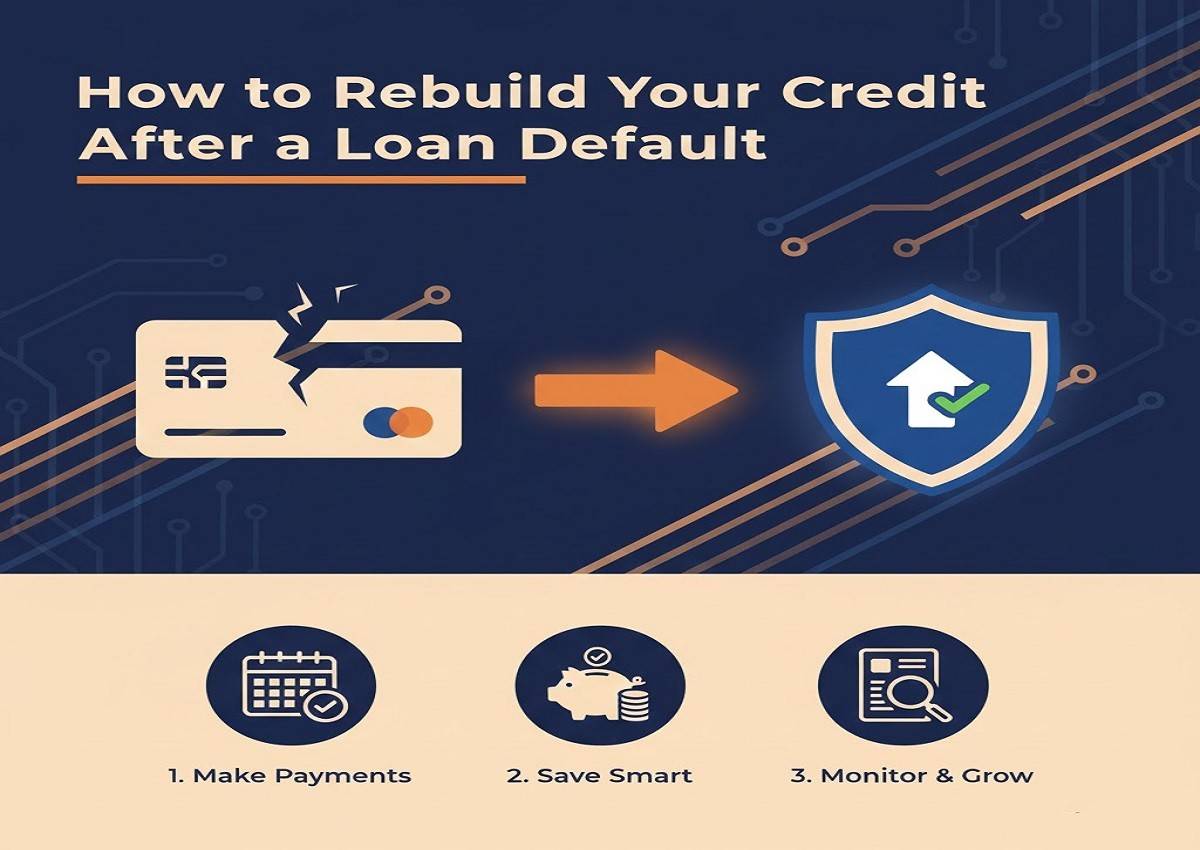
How to Rebuild Your Credit After a Loan Default
❤️ Spread the Love
Loan defaults are more common today than most people realise. With rising delinquencies in small-ticket loans, personal loans, and credit cards, thousands of borrowers are struggling to recover their financial credibility. A single default can feel overwhelming—your score drops instantly, lenders hesitate to approve new credit, and interest rates rise.
But here’s the truth: a loan default is not the end of your credit journey. It’s a temporary setback, not a permanent label.
With the right plan, actionable steps, and support tools, you can rebuild your credit and return to a healthy score.
In this guide, we simplify how to rebuild your credit after a loan default, what mistakes to avoid, and how tools like PayMe’s Credit Assist can help you recover faster.
What Happens When You Default on a Loan?
Before rebuilding your credit, it’s important to understand the impact of a default:
- Your credit score can drop 50–150 points, depending on your profile.
- Defaults stay on your credit report for up to 7 years, but their impact reduces gradually.
- Lenders may reject new loan applications for a certain period.
- Your interest rates may increase.
- Collectors or lenders may initiate follow-up actions.
While the impact feels heavy, all of it is reversible with consistent action.
How to Rebuild Your Credit After a Loan Default
1. Review Your Full Credit Report
Your recovery begins with clarity.
Download your report directly from:
- CIBIL
- Experian
- CRIF HighMark
- Equifax
Check for:
- Incorrect defaults
- Wrong outstanding amounts
- Closed loans showing as active
- Duplicate entries
- Fraudulent accounts
If you spot errors, raise a dispute immediately.
Tip: Make it a habit to track your score monthly instead of only when applying for a loan.
2. Settle or Close the Defaulted Loan
If the default is genuine, the next step is resolution. You have three options:
a) Full Payment
You pay 100% of the outstanding amount.
This creates the strongest positive impact.
b) Settlement
You negotiate with the lender for a reduced amount.
But note:
“Settled” status is not ideal and may reduce future credit approvals.
c) Payment Arrangement
Many lenders allow EMI restructuring or flexible schedules.
After closing or settling, always request a No Dues Certificate (NDC) and ensure it is updated in your credit report.
3. Start Building Positive Credit History Again
A default may push you down, but fresh positive credit lifts you back up.
Here’s how:
a) Use a Secured Credit Card
A credit card backed by FD is easier to get and improves your score quickly.
b) Pay All EMIs on Time
Set up auto-debit to avoid missing payments.
c) Keep Credit Utilisation Low
Use less than 30% of your card limit.
d) Don’t Apply for Multiple Loans
Each inquiry reduces your score.
Limit to 1–2 applications every few months.
4. Reduce Your Existing Debts Strategically
If you already have multiple loans, reduce them systematically.
Debt Snowball Method
Pay the smallest loan first → get momentum → move to bigger loans.
Debt Avalanche Method
Pay the highest interest loan first → reduce total interest outflow.
Choose the method based on your comfort.
5. Build an Emergency Fund
Defaults often happen because an unexpected expense disrupts EMI payments.
Create a buffer:
- Start with ₹10,000–₹20,000
- Gradually build 3–6 months of expenses
This prevents repeat delinquencies.
6. Use Tools Designed for Credit Recovery (Like PayMe’s Credit Assist)
If recovering alone feels confusing, structured guidance can speed up your journey.
PayMe’s Credit Assist
A specialised program designed to help individuals with:
- Low or damaged credit scores
- Past loan defaults
- High credit utilisation
- Mismatch in credit reports
- Difficulty getting fresh loans
Credit Assist analyses your profile and gives:
- A personalised roadmap
- Fixes for disputed entries
- Recommendations to improve your score
- AI-generated personalised video credit reports
- Tips to reach a score of 750+ or even 800+
👉 Explore Credit Assist here: https://www.paymeindia.in/credit-assist/
For borrowers recovering after a default, this tool is extremely helpful, especially when lender rejections start to pile up.
7. Maintain Consistency: Credit Rebuilding Takes Time
Improvement doesn’t happen in a week.
Most borrowers see:
- 30–50 point improvement in 3 months
- 60–100 points in 6 months
- Full recovery in 9–15 months
Avoid shortcuts, unauthorised “score correction services,” or false promises.
8. Avoid These Credit-Damaging Mistakes
While recovering, avoid:
- Taking too many short-term loans
- Using your full credit limit
- Closing old credit cards
- Ignoring minor delays
- Mixing personal loans with high-interest loans like BNPL or credit card rollover
Good credit behaviour compounds over time.
9. Monitor Your Score Every Month
Track your progress with:
- CIBIL score check
- Experian monthly report
- PayMe’s personalised video credit report
This helps you identify improvements or new issues early.
Timeline: How Long Will It Take to Rebuild My Score After a Default?
| Milestone | Expected Time |
|---|---|
| Start seeing improvements | 60–90 days |
| Significant recovery | 6–9 months |
| Strong score above 750 | 9–15 months (with consistent behaviour) |
You don’t need a perfect score immediately—you just need a direction and discipline.
Conclusion
A loan default may feel like a major setback, but it is completely reversible. With the right knowledge, timely actions, and supportive tools like PayMe’s Credit Assist, you can rebuild your financial reputation faster and more confidently.
Recovery is not about speed—it’s about consistency.
Every on-time payment, every reduced debt, and every corrected report entry moves you closer to a strong credit profile.
If you’ve defaulted in the past, this is your chance to start again—smarter, stronger, and financially empowered.
Frequently Asked Questions (FAQs)
How long does a loan default stay on the credit report?
Up to 7 years, but its impact reduces significantly with consistent positive credit behaviour.
Can I get a loan after defaulting?
Yes, but lenders may initially offer smaller amounts, higher interest rates, or secured loans.
Will settlement improve my credit score?
It removes the default but marks the account as “Settled,” which is better than “Written Off” but not as good as “Closed.”
How can PayMe’s Credit Assist help?
It analyses your credit report, highlights issues, and gives a personalised roadmap to improve your score—plus AI-generated video reports.
How long will it take to rebuild my credit after clearing the default?
Typically 6–12 months, depending on your repayment behaviour.
Also, read:
About the Author
admin
@admin
View all posts →